Carced News
Nissan's Rogue Hybrid Undercuts The RAV4 On Price But Loses On MPG — And That Trade-Off Is More Interesting Than It Looks
Nissan brought its e-Power tech to America for the first time, and it drives more like an EV than a traditional hybrid. Whether that's worth trading fuel economy for depends entirely on what you actually want from a hybrid.
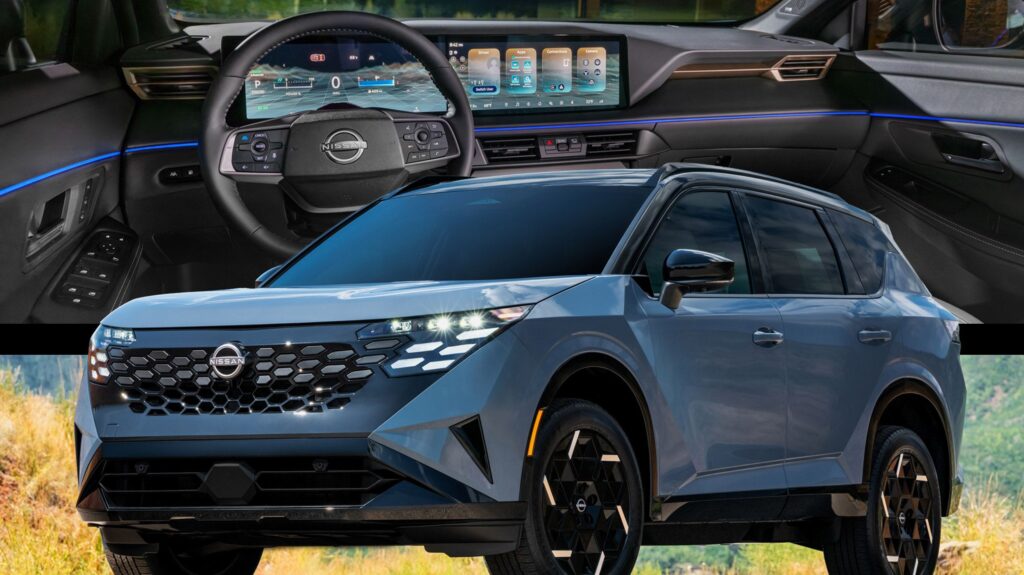
Nissan Isn’t Copying Toyota’s Hybrid Formula — It’s Betting On A Completely Different One
The Rogue Hybrid marks the first time Nissan’s e-Power technology has reached the US, and it’s a genuinely different approach to hybridization than what Toyota’s been running for decades. Rather than the engine and electric motors sharing propulsion duties, the Rogue’s turbo 1.5-liter three-cylinder acts purely as a generator — it never actually turns the wheels. Dual electric motors handle 100% of propulsion, drawing from a small 1.67 kWh buffer battery. That makes this drive more like an EV with an onboard generator than a conventional hybrid, and that distinction matters for how it actually feels to drive.
The Price Positioning Is Genuinely Aggressive
At $35,490 to start, with AWD standard across the entire lineup, the Rogue Hybrid actually undercuts most RAV4 Hybrid trims — Toyota’s cheapest AWD-capable RAV4 Hybrid is only $2,190 less than the Rogue’s base SV trim, essentially at parity. Given that AWD is often a costly option add-on elsewhere, making it standard while still hitting a competitive starting price is a real value proposition, not just a marketing number.
The MPG Trade-Off Is The Real Story Here
Here’s where the comparison gets genuinely interesting: Nissan estimates 38 MPG combined for the Rogue Hybrid, a meaningful improvement over the standard Rogue’s 32 MPG — but it trails the RAV4 Hybrid AWD’s official 42 MPG rating by a real margin. For buyers who prioritize outright fuel economy above all else, that gap favors Toyota clearly. But for buyers drawn to e-Power’s more EV-like drivability, the trade-off might be entirely worth it.
The Interior Comparison Against The RAV4 Is Bold
Nissan is explicitly claiming more front headroom and legroom than the RAV4, plus a 31.1 cubic-foot cargo area. Making that comparison directly and publicly is a confident move — it invites cross-shoppers to check the numbers for themselves, which suggests Nissan is genuinely confident the Rogue wins that specific comparison rather than just hoping buyers won’t check.
The Tech Details Show Real Attention To Feedback
Physical climate controls on the center console (rather than burying them in a touchscreen), 15-watt Qi2 wireless charging, an updated ProPilot suite with Auto Lane Change and Hands-off Traffic Jam Support, and a 3D HD Around View Monitor with Invisible Hood View — that’s a genuinely well-specified package, particularly the retained physical climate controls at a moment when several competitors have been criticized for burying essential functions in touchscreens.
Nissan Is Now Running Three Distinct Rogue Strategies Simultaneously
Offering pure combustion, e-Power hybrid, and Mitsubishi Outlander-derived plug-in hybrid variants side by side is a genuinely broad hedge across the entire compact SUV buying spectrum. That’s Nissan betting it doesn’t yet know exactly where consumer preference will land, so rather than picking one electrification strategy, it’s covering multiple bases within a single nameplate.
My Take
The RAV4 Hybrid remains the smarter choice for buyers purely optimizing for fuel economy, but the Rogue Hybrid’s standard AWD, competitive pricing, and genuinely different EV-like driving character make it a legitimate alternative rather than a “me too” hybrid entry. If e-Power’s driving feel appeals to you the way it clearly appeals to Nissan’s engineering team, the 4 MPG gap versus the RAV4 is a reasonable trade for a meaningfully different ownership experience.
Would a more EV-like driving feel (even with somewhat lower MPG) be worth choosing the Rogue Hybrid over the more fuel-efficient RAV4, or is outright efficiency the deciding factor for you in this segment? I’d love to hear from anyone who’s actually driven an e-Power vehicle.
More Carced news

You Can Buy HWA's $760K New 190E Evo II, Or The Real Thing For Less — And That's A Genuinely Hard Choice
A restomod exists to solve the problem of an original being too rare, too fragile, or too expensive to actually use. This time, the original might be the cheaper option.
Read article
Genesis Just Patented The G90 Coupe And Convertible, And That's More Than Just Paperwork
A design patent isn't a production announcement, but Genesis wouldn't bother protecting a design it had no intention of ever building — and having seen the Convertible in person, I understand why they'd want to.
Read article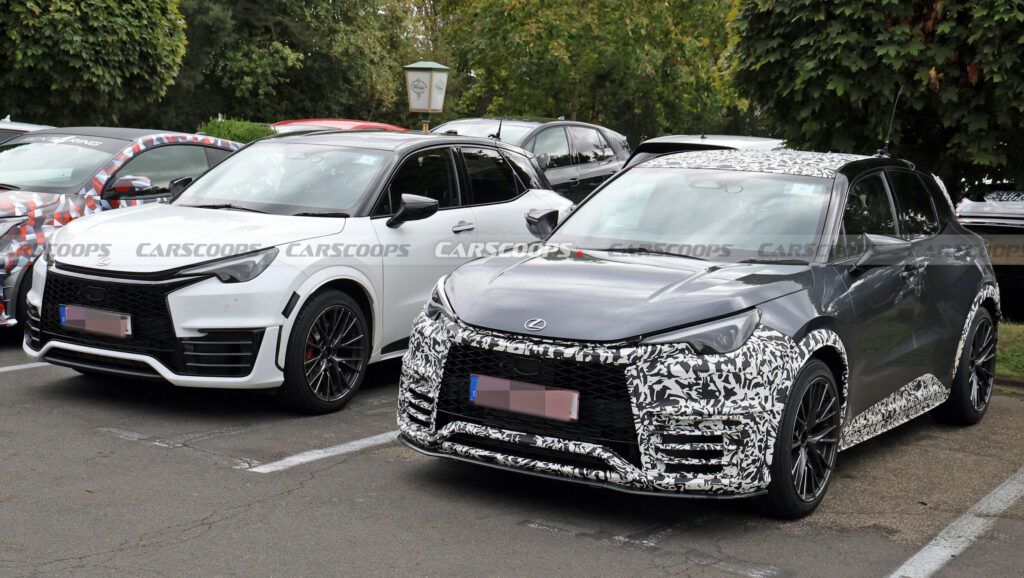
Lexus Is Building An Even Hotter LBX, And Carbon Fiber Is Doing All The Talking
The existing LBX Morizo RR already had a manual gearbox and GR-derived power. This new version's whole mission is shedding weight, and it's doing it with carbon fiber almost everywhere.
Read article
VW Wants $149 A Year To Turn Your Parked Car Into A Game Console, And I'm Weirdly Okay With It
Yet another automotive subscription fee sounds exhausting on principle. But this one is actually solving a real, specific dead-time problem — and it's bundled with features people already pay for anyway.
Read article