Carced News
Bentley's First EV Could Go Faster, And Deliberately Chose Not To — That Tells You Everything
Bentley's engineers concluded that going faster than 2.8 seconds to 60 would genuinely be uncomfortable for most buyers, and simply chose not to chase the number anyway. That restraint says more about Bentley's actual philosophy than any spec on the sheet.
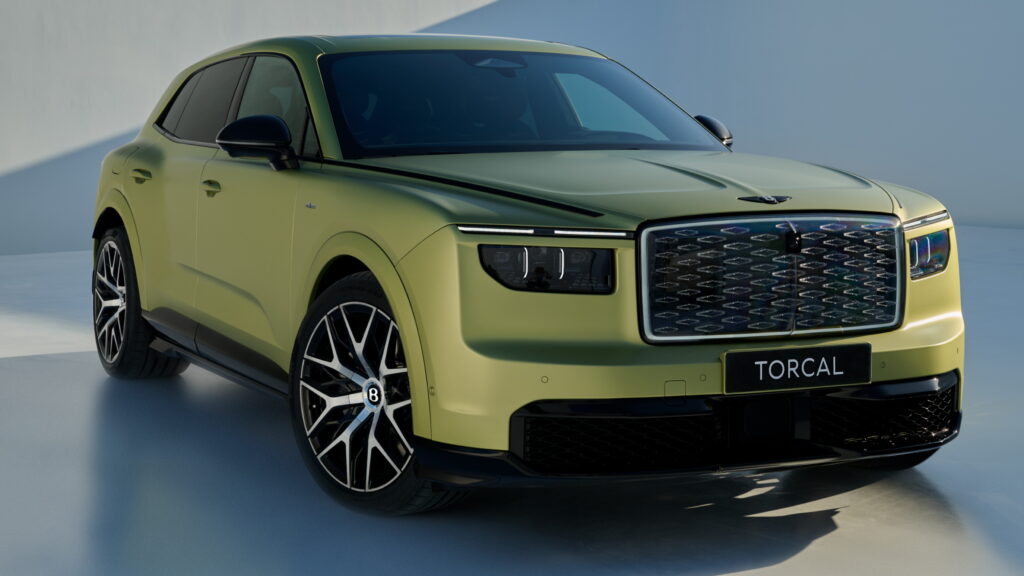
Bentley Had More Performance Available And Simply Chose Not To Use It
In an industry currently obsessed with chasing ever-lower 0-60 times, Bentley’s decision on the Torcal — its first EV — stands out precisely because it goes against that trend. Engineers concluded that acceleration beyond the Torcal S’s already-brutal 2.8-second 0-60 becomes genuinely uncomfortable for most customers, and deliberately drew the line there rather than chasing a headline number just because the hardware could theoretically support it.
The Numbers Are Still Genuinely Serious
The standard Torcal makes 810 hp and 881 lb-ft, hitting 60 mph in 3.3 seconds and topping out at 155 mph. The Torcal S steps up to 875 hp and 996 lb-ft with Launch Control engaged, dropping to that 2.8-second sprint and raising top speed to 162 mph. These aren’t modest figures by any measure — Bentley simply chose a ceiling rather than an unlimited chase.
This Isn’t The Company Being Conservative Out Of Caution
The framing matters here: Bentley isn’t saying it couldn’t go faster. It’s saying it evaluated the customer experience at that level of acceleration and decided the discomfort wasn’t worth chasing a marginally better spec-sheet number. That’s a meaningfully different philosophy from most EV makers currently locked in an acceleration arms race, and it’s consistent with Bentley’s broader identity as a brand built around refined experience rather than outright numbers.
The Battery And Charging Specs Are Genuinely Competitive
A 113-kWh usable battery delivering up to 375 miles of WLTP range, backed by a 10-year, 100,000-mile warranty, paired with 400 kW DC charging capability that takes the battery from 10-80% in under 20 minutes — and Bentley claims roughly 100 miles can be added in just seven minutes on a sufficiently powerful charger. Those are genuinely strong numbers regardless of price bracket, though Bentley’s own acknowledgment that most owners will charge almost exclusively at home undercuts some of the practical urgency of the ultra-fast charging spec.
This Is A Genuine New Model Line, Not A Rebadged Bentayga
Bentley is explicit that the Torcal isn’t simply an electric version of an existing model — it’s the brand’s fourth distinct model line, introducing a new design language the company says will influence future models “regardless of what’s under the hood.” That’s a meaningfully bigger commitment than an EV variant bolted onto an existing platform; it signals the Torcal’s design and engineering approach is meant to ripple outward across Bentley’s combustion lineup too.
The Design Details Show Real Restraint
An illuminated diamond grille dominating the nose alongside split headlights and thin DRLs, paired with a deliberately reduced number of body lines — letting proportions and muscular rear haunches carry the visual weight instead. Bentley claims the Torcal is actually its shortest four-door model despite a substantial 196.9-inch length, which is a genuinely interesting packaging achievement for an EV platform.
My Take
The acceleration-cap decision is the detail that actually tells you something meaningful about Bentley’s approach here. Plenty of EV makers would have happily marketed a sub-2.5-second 0-60 if the hardware allowed it, spec-sheet bragging rights be damned. Bentley instead prioritized what it believes the actual ownership experience should feel like — which, whether or not you personally agree with the trade-off, is a genuinely coherent piece of brand philosophy carried through to a first-generation EV rather than abandoned in the chase for headline numbers.
Do you think Bentley made the right call capping acceleration for comfort, or would you rather have the option to push the numbers further even if it’s genuinely uncomfortable? I respect the restraint, personally.
More Carced news

You Can Buy HWA's $760K New 190E Evo II, Or The Real Thing For Less — And That's A Genuinely Hard Choice
A restomod exists to solve the problem of an original being too rare, too fragile, or too expensive to actually use. This time, the original might be the cheaper option.
Read article
Genesis Just Patented The G90 Coupe And Convertible, And That's More Than Just Paperwork
A design patent isn't a production announcement, but Genesis wouldn't bother protecting a design it had no intention of ever building — and having seen the Convertible in person, I understand why they'd want to.
Read article
Lexus Is Building An Even Hotter LBX, And Carbon Fiber Is Doing All The Talking
The existing LBX Morizo RR already had a manual gearbox and GR-derived power. This new version's whole mission is shedding weight, and it's doing it with carbon fiber almost everywhere.
Read article
VW Wants $149 A Year To Turn Your Parked Car Into A Game Console, And I'm Weirdly Okay With It
Yet another automotive subscription fee sounds exhausting on principle. But this one is actually solving a real, specific dead-time problem — and it's bundled with features people already pay for anyway.
Read article